from 0 review
8 Days / 7 Nights
Daily Tour
Unlimited
English
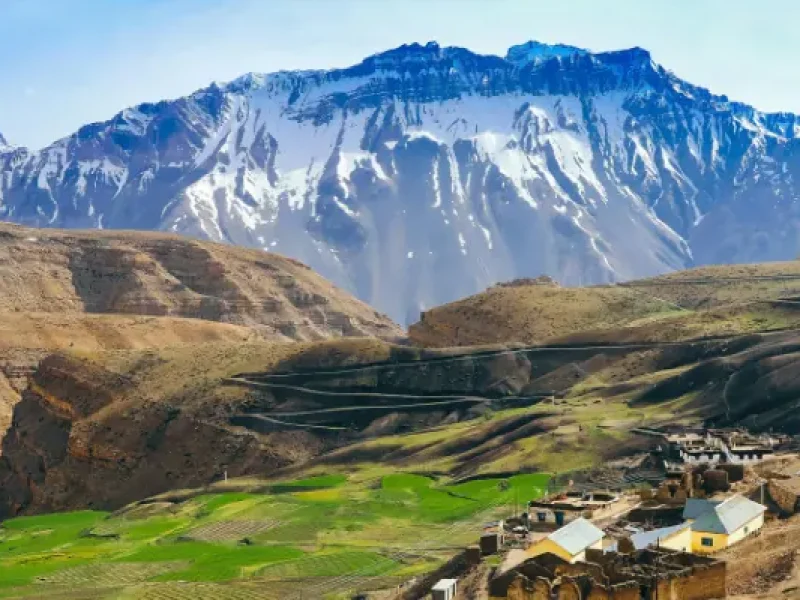
Spiti Valley is one of India’s highest cold desert regions, accessible in winter only via the Shimla–Kinnaur route due to heavy snowfall closing the Manali route. Expect temperatures as low as −20 °C and snow-covered landscapes unmatched in the Himalayas.
A Spiti Valley winter tour is a journey into one of India’s most extreme yet breathtaking cold desert regions. From December to March, Spiti transforms into a snow-covered Himalayan wilderness where temperatures often fall below -15°C to -20°C.
Unlike summer travel, winter tours to Spiti offer frozen rivers, silent villages, snow-laden monasteries, and a rare glimpse into high-altitude Himalayan life. This season is ideal for travelers seeking raw adventure, solitude, and authentic cultural experiences.
While most travelers explore Spiti Valley during summer, winter is when the region reveals its most authentic and untouched character. With roads buried under snow and villages cut off for months, winter travel offers rare access to Spiti’s raw Himalayan soul.
Winter weather in Spiti Valley is severe and unpredictable. Travelers must be prepared for extreme cold and snow-covered terrain.
Due to heavy snowfall, road access and travel schedules may change based on weather conditions.
Spiti Valley is located in the northeastern region of Himachal Pradesh and lies at an altitude ranging from 12,500 ft to 15,500 ft. Classified as a high-altitude cold desert, the region receives minimal rainfall but experiences heavy snowfall during winter months.
| Month | Temperature | Snowfall | Accessibility |
|---|---|---|---|
| November | -2°C to 10°C | Light | Open |
| December | -10°C to 5°C | Heavy | Limited |
| January | -20°C to -5°C | Extreme | Restricted |
| February | -18°C to 0°C | Heavy | Limited |
| March | -10°C to 8°C | Melting Snow | Improving |
During winter months, the Manali–Spiti route remains completely closed due to heavy snowfall at Kunzum Pass. The only operational access to Spiti Valley in winter is via the Shimla–Kinnaur route.
Delhi → Shimla → Narkanda → Kalpa → Nako → Tabo → Kaza
🚫 Manali–Spiti route closes completely due to heavy snow at Kunzum Pass.
Traveling to Spiti Valley in winter requires expert planning, acclimatization support, trained drivers, emergency backup, and reliable accommodation in sub-zero temperatures.
| Factor | Self-Drive | Guided Tour |
|---|---|---|
| Road Safety | High Risk | Professionally Managed |
| Medical Backup | No | Available |
| Local Expertise | Limited | Experienced Team |
| Accommodation | Uncertain | Pre-Arranged |
Experience the raw Himalayas like never before. Book your Spiti Valley Winter Tour Package today and explore India’s most untouched winter destination with safety, expertise, and comfort.
Shimla | Narkanda | Tranda Devi temple | Sangla | Chitkul | Suicide Point | Roghi Village | Kalpa | Confluence of Spiti and Sutlej River | Khab | Tabo | Nako Village | Gue Monastery | Ajanta of Himalayas | Kaza | Dhankar Monastery | Dhankar Village | Confluence of the Spiti and Pin rivers | Langza | Hikkim Village | Komic | Key Monastery | Chaicham Bridge | Chau Chau Kang Nilda Peak | Rampur
Departure from Delhi to Shimla. Overnight Journey by Volvo
Shimla Pick Up & Drive via Narkanda to Sangla / Chitkul.
Sangla /Chiltkul to Kalpa
Kalpa to Tabo via Nako, Gue Monastery
Tabo to Kaza via Dhankar Monastery
Kaza - Langza, Hikkim, Komick, Key Monastery, Chicham Bridge
Kaza to Return Rampur
Reach Delhi by Morning